Geschichte des Archivs
The tradition of collecting can be traced back to the Akademie’s origins in the 17th century. The first works were derived from the teaching and model collection used for training artists, as well as from members’ gifts and specimen copies. An extensive specialist library was also built up in parallel. Despite losses brought on by a fire in 1743 and the Second World War, these holdings, together with the Akademie’s administrative documents, still form the basis of the Archives.
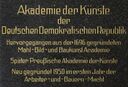
It was not until much later, however, that the archives were given institutional status. After 1945 and the political division of Germany, two new academies were founded in Berlin: one in the East and one in the West. They began to acquire artists’ estates and entrusted the parts of the Prussian Academy’s collection that had fallen to them to specialist staff. While the art collection was held by the “Deutsche Akademie der Künste”, which came into being in 1950 and was later renamed the “Akademie der Künste der Deutschen Demokratischen Republik”, the Historical Archives and Präsidialbibliothek (President’s Library) were administered by the West Berlin “Akademie der Künste”, which was established in 1954.
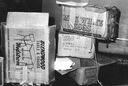
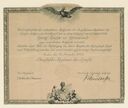
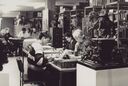
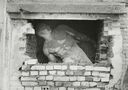
The active work of collecting began with the estates of two writers living in exile: that of president-elect Heinrich Mann at the Akademie der Künste (East) in 1950 and of Georg Kaiser at the Akademie der Künste (West) in 1956. Focusing the collection on artists in exile was intended to recover and rehabilitate the work of those who had suffered persecution.
In parallel with the Akademie’s expansion to include new arts sections, the collections held by the two archives also diversified. The performing arts were added to their existing visual arts, music and literature departments. The Architectural Archives were established in 1961, and the Film and Media Arts Archives in 1984: these departments existed only at the Akademie der Künste (West Berlin) at the start.
When the two separate institutions in Berlin merged into one Akademie in 1993, their archives were consolidated as well.” The Stiftung Archiv der Akademie der Künste was responsible for a considerable number of archive sites and the dissemination of culture from both East and West. When this responsibility passed to the federal government in 2006, the foundation was dissolved and its holdings were transferred to the Akademie.