European Alliance of Academies
The alliance is committed to freedom of art in Europe and stands in solidarity with threatened art and cultural institutions – through artistic collaborations, public events and debates with political actors.
Events
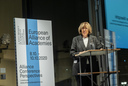
Founding Conference 2020. A Strong Voice for a Democratic Europe
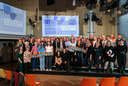
At the invitation of the Akademie der Künste and with the participation of the then Minister of State for Culture and Media, Prof. Monika Grütters, around 70 representatives of European art academies and cultural institutions gathered in October 2020 for a hybrid conference to found a European Alliance of Academies.
Cultural Policy Events Across Europe
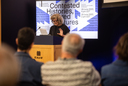
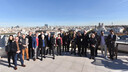
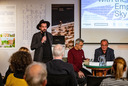
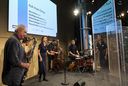
Since 2021, the European Alliance of Academies has been organising public events in cities where the network is represented by institutions, such as Budapest, Berlin, Amsterdam, Madrid, Cambridge and Kraków.
The events highlight various aspects of the potential of artistic freedom, the mechanisms that restrict it and its impact on artistic creation: the relationship between language and nationalism, the power of artistic collaboration across borders, the role of memory and remembrance culture in a common understanding of Europe as a cultural space, and the effects of war and crisis on artistic freedom.
All events are organised in close cooperation with local institutions and prepared by several member institutions, ensuring a European perspective on the topic.


Campaigns and Projects
Cultural Policy Actions
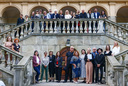
In addition to public discussions aimed at a broad audience, the members of the European Alliance of Academies are also concerned with the political framework at national and European level. The network is in contact with the Committee on Education and Culture in the European Parliament and with the UN Special Rapporteur on Cultural Rights.
In cooperation with the European Centre for Constitutional and Human Rights (ECCHR), an online petition and a letter of complaint on the cultural policy situation in Hungary were drawn up and submitted to the European Parliament and the UN Special Rapporteur on Cultural Rights on 9 May 2021.
The network takes a public and united stance on important political developments and events, such as cultural policy developments in Hungary and Poland, Russia's war of aggression against Ukraine, and the 2024 European elections.
LOOM
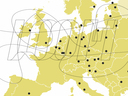
In 2022, the European Alliance of Academies launched LOOM – Interweaving the Arts in Europe, a digital platform for transnational projects and artistic collaborations between the institutions and artists in the network.
LOOM claims digital space for freedom in art – a space in which artistic positions are confronted with current political challenges and possible answers to current social and cultural questions are provided. The platform aims to create a digital territory that extends beyond the local reach of artists and institutions and “weaves” artistic practices in Europe across borders into a pattern.
The Climate Crisis and Café Climate
In 2023, a working group was established to address the pressing issue of the climate crisis from an artistic and cultural perspective.
What impact does the climate crisis have on art and culture in Europe? How can the Alliance as a whole and each art academy or cultural institution in their respective countries develop new formats to understand climate change and initiate actions to protect the climate?
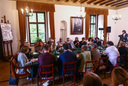
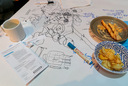
The group developed the Café Climate format to engage in dialogue with civil society, experts and political actors on an eye-to-eye level about how the climate crisis affects social cohesion, the daily lives of citizens, and art and culture.
Another project is the digital Atlas of Change, which documents climatic changes already taking place in various locations in Europe. The result is an artistic development map with texts, photos and videos that make us aware of the alarming effects of the climate crisis.