SINN UND FORM
SINN UND FORM, founded in 1949 and published by the Akademie der Künste since 1950, ranks among the most internationally renowned literary journals. The carefully composed issues feature a wide variety of topics and genres.
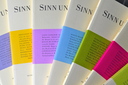
Already under its first editor-in-chief, Peter Huchel, the “Beiträge zur Literatur” (Contributions to Literature), founded by Johannes R. Becher and Paul Wiegler in East Berlin, gained an excellent reputation. Conceived as a beacon of socialist culture, the journal maintained a strong editorial independence, including its selection of authors. After the opening issue, Thomas Mann predicted that SINN UND FORM would “soon take the leading position among German literary revues”.
Since the journal was not subject to pre-censorship, it was able to publish literary texts and plays that were otherwise not allowed to be printed or performed in the GDR, such as those by then or later Akademie members Christa Wolf, Volker Braun, Ulrich Plenzdorf, Peter Hacks and Christoph Hein. Huchel’s attitude, which was repeatedly perceived as liberal and rebellious, led to his dismissal in 1962. But his successors continued to uphold the journal’s concept, with the later Akademie president Walter Jens describing SINN UND FORM as the “secret journal of the nation”.
Following the unification of the two academies in East and West in 1993, the Akademie der Künste, now representing the entire country, became the journal’s publisher, with the corresponding passage added to the statutes. This makes SINN UND FORM one of the very few publishing formats from the GDR that still exists today. The publication’s non-profit-making character aligns with the Akademie’s primary task of promoting art and culture in Germany.
The journal’s continuing popularity is based on the special composition of each issue, the absence of themed editions, the mix of poetry and prose, essays, interviews and archive publications (including the Akademie’s Archives), contributions from established and emerging authors, and the meticulous editing of the texts. SINN UND FORM is characterised by its contemporary and historical perspective, as well as its focus on Eastern and Central Europe, closely linked to its history.