History of the Akademie der Künste
The Akademie der Künste is one of the oldest cultural institutions in Europe. Founded in 1696, it looks back on over 300 years of fascinating and changing history.
Founding and Transformations
Courtly Prestige
In 1696, Frederick III, the Elector of Brandenburg, founded the Academie der Mahl-, Bild- und Baukunst (Academy of Painting, Sculpture and Architecture). By doing so, he also sought to foster and promote the province of Brandenburg, which was poor and underdeveloped at that time, so that it could take its place alongside other German-speaking territories on the cultural stage. The arts were important for ceremonial and courtly prestige and became even more relevant when Frederick crowned himself the first King in Prussia in 1701.
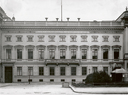
The new institution was primarily entrusted with the quite practical tasks of training artists and boosting the economy by raising the level of artistic production to meet the ideals of the age. The Academy was both a vocational college and a university of the arts, a members’ society for the academically trained, and an expert commission to advise the court on questions related to the arts. From 1701, the institution was housed in the former royal stables building on Unter den Linden, which it shared with the Akademie der Wissenschaften (Academy of Sciences), founded in the same year.
Reorganisation and Democratisation
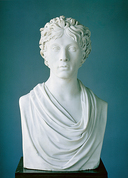
During Frederick’s reign, the Academy flourished, supported by a generous budget and numerous court commissions. However, under his successors, Frederick William I and Frederick II, the institution gradually became little more than an unimportant drawing school. This situation did not change until 1786, when the newly crowned Frederick William II expanded the institution’s scope and fields of activity. From 1786 to 1790, the Royal Prussian Academy of Arts underwent a fundamental reorganisation and a process of democratisation, largely driven by its member and later director Daniel Chodowiecki.
In the following years, the sculptor Johann Gottfried Schadow, who served as director of the Prussian Academy for 36 years, played a leading role. In 1784, the pastel painter Jeanette Nohren received honorary membership and became the first woman admitted to the Academy. In 1833, as a result of an initiative going back to Carl Friedrich Zelter, the Section for Music was founded, and its first members included such renowned figures as Felix Mendelssohn Bartholdy, Giacomo Meyerbeer and Gaspare Spontini.
Residence at Pariser Platz
The desire to provide more intensive teaching and training gradually led to the establishment of academic art colleges. In 1799, the Bauakademie (Academy of Architecture) was founded, one of two predecessor institutions for today’s Technische Universität (TU) Berlin. In 1875, the Prussian Academy established its own academic college of music and later a college of fine arts, which laid the foundation for today’s Berlin University of the Arts (UdK). Dedicated new buildings were constructed in Charlottenburg to house the academic colleges, and the Prussian Academy of Arts was given the former Palais Arnim on Pariser Platz as its new residence. In 1907, after conversion work and the construction of an annexe, the Prussian Academy’s new home was festively inaugurated.
Between the Weimar Republic and the War
Disputes Over Modernity
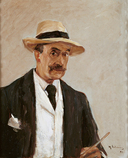
In the last years of the Wilhelmine era, the Prussian Academy of Arts increasingly saw itself as the “regulator of artistic life”, as its later president, Max Liebermann, described its function. From 1920 to 1932, during Liebermann’s term in office, the Prussian Academy not only became a location for critical debates and disputes over modernity but was also influenced by the extreme political and social tensions of those years.
Founded in 1926, the Poetry Section (Dichtkunst, later the Literature Section), whose members included Heinrich and Thomas Mann, Alfred Döblin, Ricarda Huch and Jakob Wassermann, soon became a forum for fiercely contested artistic and ideological views.
Exclusion and Emigration
The National Socialists’ cultural policies brought this development to a drastic and dramatic close. On 15 February 1933, within weeks of the Nazi seizure of power in January, Käthe Kollwitz and Heinrich Mann were pressured into resigning from the Prussian Academy by Reich Commissioner Bernhard Rust for signing an appeal to the socialist SPD and the communist KPD parties to form a united front in the upcoming elections. By 1938, 41 members had been barred, had resigned from the Prussian Academy, and/or had left Germany.
In 1937, the Prussian Academy had to vacate its building on Pariser Platz to make way for the offices and staff of Albert Speer, Hitler’s General Building Inspector. The Prussian Academy moved to the Kronprinzenpalais, also located on Unter den Linden. In 1945, during the last days of the war, the Prussian Academy building on Pariser Platz was destroyed.
Two Academies in East and West
Divided Berlin
When the Allied Control Council passed the law to abolish the state of Prussia in February 1947, it was unclear whether the Prussian Academy could continue. In 1950, after the division of Germany, the Deutsche Akademie der Künste, established in East Berlin, took up “the work of the Prussian Academy of Arts, founded in 1696, in a renewed and expanded form” (Statutes from 1955). Heinrich Mann was appointed president when it was founded. Because he died before taking office, Arnold Zweig became the first president.
However, the Cold War, the ideological appropriation of the arts, and the city’s unrelenting division did not allow for the creation of a single Akademie der Künste. As a result, there were similar discussions in the Western sector of Berlin on founding a new Akademie der Künste, also building on the tradition of the Prussian Academy of Arts.
A New Building on Hanseatenweg
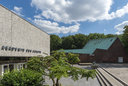
When the constituent assembly was held in 1956, Hans Scharoun was elected president. New Sections representing Architecture and the Performing Arts were created alongside the existing Visual Arts, Music and Literature Sections; in 1984, the Film and Media Arts Section was added. A few years after its refounding, the Akademie was also given its own building – the venue on Hanseatenweg at the edge of Berlin’s Tiergarten park, funded by German-American Henry H. Reichhold and designed by Werner Düttmann.
Unification and a New Era
A Complicated Process
In 1990, with German reunification, the statutory basis for the Akademie der Künste in former East Berlin was called into question. Nonetheless, the members still met that year and elected Heiner Müller president. In January 1991, Berlin’s House of Representatives made the political decision to have only one Akademie der Künste in the future and to merge the existing archives. In February 1992, under Walter Jens, president of the Akademie in former West Berlin, a majority of members voted to merge the two institutions despite significant opposition, amid accusations that the Akademie members in former East Germany were intimately linked to the old political system.
After a lengthy and public discussion, the Law on the State Treaty on one Akademie der Künste funded by the federal states of Berlin and Brandenburg went into effect on 1 October 1993. The election of Walter Jens as the first president of the newly constituted Akademie der Künste in June 1994 brought the difficult merger process to a close. Upon the completion of his term of office in 1997, Walter Jens was elected honorary president by the Plenary Assembly.
Federal Funding
Jens’ successor was Hungarian writer György Konrád, who was also re-elected in 2000. Under his presidency, the Akademie became a venue for encounters and exchanges between artists and intellectuals from Eastern and Western Europe. During his period in office, the Gesellschaft der Freunde der Akademie der Künste (Society of Friends of the Akademie der Künste) was also established – inspired by the historical model of a similar society under President Max Liebermann – and the ground was prepared for the Akademie to become a body under public law funded by the Federal Republic of Germany.
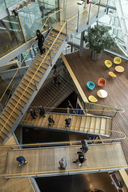
In 2003, Swiss writer Adolf Muschg was elected president of the Akademie der Künste. He oversaw the Akademie’s incorporation as a government-funded body and the 2005 unveiling of the new Akademie building, designed by Günter Behnisch with Werner Durth, at the historical Pariser Platz location.
A Place to Come Together
Graphic artist Klaus Staeck was elected president in 2006. Over the following years, the new Akademie building became a venue for open debate on cultural and social issues. In 2009, the members elected Klaus Staeck to a second term as president, and re-elected him to a third term in 2012. After he left office in 2015, the Akademie Senate elected to make him honorary president.
Filmmaker Jeanine Meerapfel was elected president in May 2015. She is the first woman to hold the position at the Akademie. During three terms in office, Meerapfel focused on protecting artistic freedom in Europe, a goal that reached a new height with the founding of the European Alliance of Academies. Since May 2024, composer, drummer and installation artist Manos Tsangaris has been president of the Akademie der Künste.